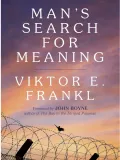
Man's Search for Meaning, Viktor Frankl
The book I've given away more than any other. I first read it at 28, and it rearranged something in me that hasn't moved back. Frankl doesn't argue that suffering has meaning. He argues that you can choose to find it, and that the choice itself is the point. I come back to that distinction more than I'd like to admit.
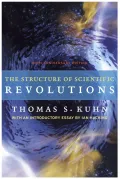
The Structure of Scientific Revolutions, Thomas Kuhn
I picked this up expecting a philosophy of science textbook and instead got a book that made me distrust the word "progress." After years of watching people in Silicon Valley announce revolutions on a quarterly basis, Kuhn's framework is the sharpest tool I have for asking: is this actually new, or are we just bored with the old?
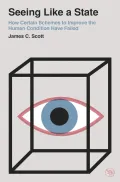
Seeing Like a State, James C. Scott
This is the book that gave me language for a feeling I'd had for a long time, that the people most confident they understand a system are usually the ones about to break it. Scott writes about forestry and city planning, but every chapter rhymes with something happening in tech right now.
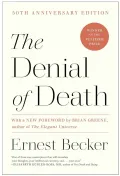
The Denial of Death, Ernest Becker
Difficult to read, difficult to put down. Becker's argument is essentially that most of what we build, we build because we can't accept that we'll die. Once you see that lens, it's hard to unsee it. This book made even more sense when I became a father.
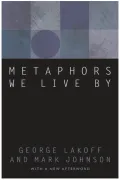
Metaphors We Live By, George Lakoff and Mark Johnson
The most useful book on this list for anyone who works with language for a living. Lakoff and Johnson convinced me that metaphors aren't decoration. They're infrastructure. After reading it, I started to hear the hidden architecture in phrases I'd been repeating without thinking, in both English and German. It changed how I write.
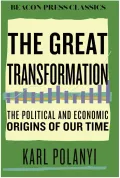
The Great Transformation, Karl Polanyi
I grew up in a country where the social market economy isn't a theory, it's a lived assumption. Polanyi helped me understand why that assumption keeps colliding with American reality. This book is the best explanation I've found for the tension between markets and the societies that contain them, a tension I watch play out every day from my particular vantage point between two countries.
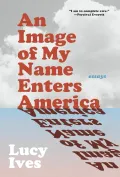
An Image of My Name Enters America, Lucy Ives
The most surprising book I've read in recent years. Ives starts from her own pregnancy and spirals outward through childhood obsessions, family history, genocide, and the mythology of American identity. It's dense and sometimes maddening and completely unlike anything else. This is a book where you grab a pen and start underlining sentences.
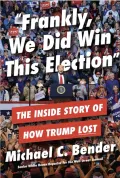
Frankly, We Did Win This Election, Michael C. Bender
This one I'm recommending not for the politics but for the reporting. Bender, a Wall Street Journal colleague, built this book from 150 interviews and the kind of sourcing that takes years to cultivate. Whatever you think of the subject, the craft is extraordinary. It's a reminder that the best journalism still comes from showing up, staying longer than everyone else, and getting people to trust you enough to talk.